
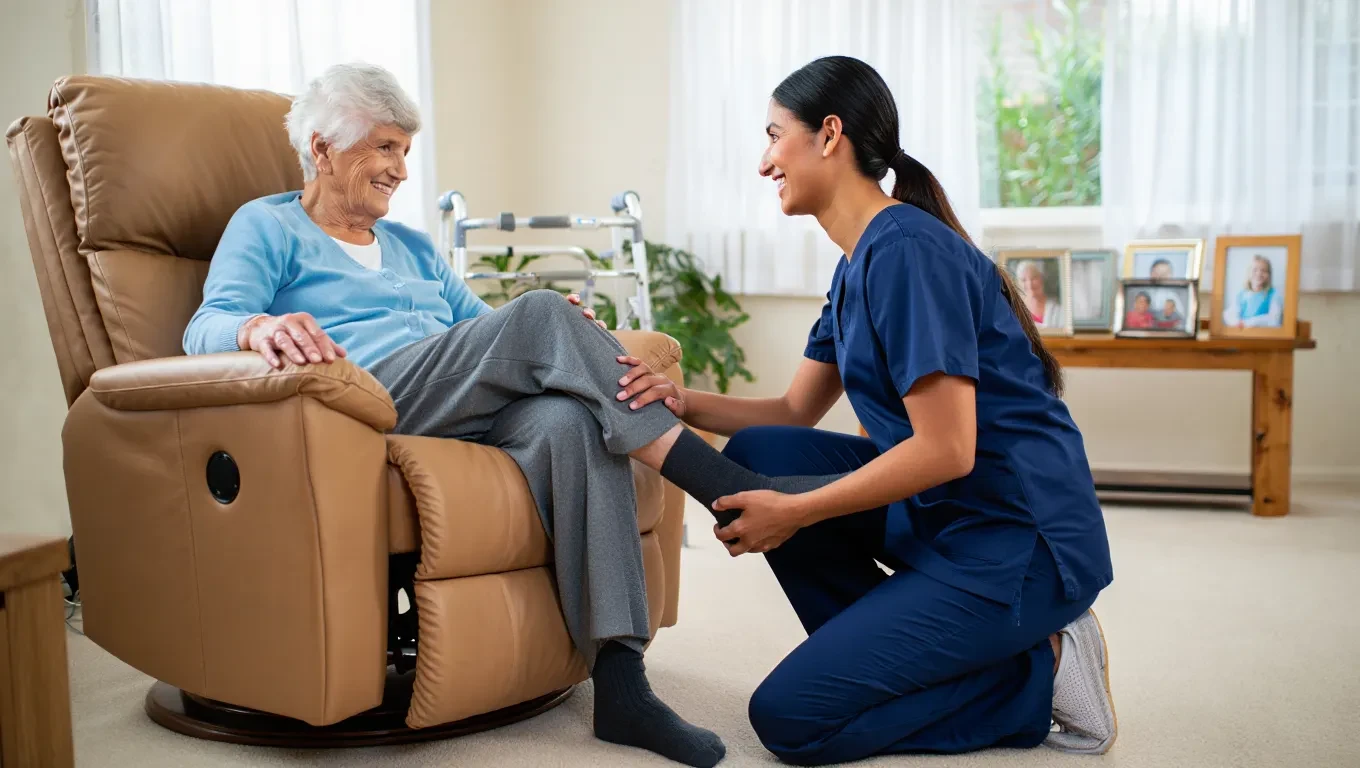
A sudden fall can affect more than one part of the body. A person may land on a hip, twist a knee, strain the back, or use an arm to stop the impact. Even without a fracture, injured muscles and joints can make walking, standing, and completing everyday activities difficult.
An accidental fall can also affect confidence. Some people begin to avoid stairs, showers, outdoor walkways, or moving without assistance because they are afraid of falling again. This reduced activity may lead to stiffness, weakness, and greater dependence on family members.
Physical therapy for slip and fall injury can address these physical and emotional barriers through a personalized rehabilitation plan. Advanced Professional Home Health Care (APHHC) provides in-home physical therapy for eligible patients in Michigan, including communities across Metro Detroit and Flint. Care is guided by the patient’s diagnosis, physician’s orders, current abilities, safety needs, and personal goals.
How Physical Therapy Helps After a Fall
After urgent injuries have been ruled out, a licensed physical therapist can evaluate pain, strength, balance, walking, joint movement, and daily function. Treatment may include safe mobility practice, progressive strengthening, balance training, assistive-device education, and practical exercises performed in the patient’s home.
The goal is not simply to reduce discomfort. Therapy helps the patient move more safely, regain confidence, complete everyday activities, and reduce the risk of another fall.
Why a Fall Can Cause Several Injuries
During a trip and fall, the body reacts quickly to protect the head and vital organs. A person may extend an arm, twist the torso, or shift weight suddenly. These protective movements can place stress on muscles, joints, ligaments, and tendons.
The area that hurts most is not always the only injured area. Someone who lands on the right side may strain the left leg while trying to regain balance. Another person may experience discomfort in the neck or back even without hitting those areas directly.
A soft-tissue injury after a fall can involve bruising, swelling, tenderness, and stiffness. These problems may not appear on a standard X-ray, but they can still interfere with movement and daily function.
A sprain occurs when ligaments around a joint are stretched or damaged. Ankles, wrists, and knees are commonly affected. APHHC’s guide comparing a sprained ankle and a rolled ankle provides additional information about ankle injuries.
Slip and Fall Injury Symptoms That Need Attention
Some symptoms begin immediately. Others appear hours or days later as swelling and inflammation increase. Patients and caregivers should monitor physical function as well as discomfort.
Possible warning signs include:
- Swelling or bruising
- Tenderness near the impact area
- Joint stiffness
- Difficulty putting weight on one leg
- Headache or dizziness
- Numbness or tingling
- New muscle weakness
- Poor coordination
- Reduced balance
- Changes in walking
- Confusion or unusual tiredness
- Increasing discomfort
- Inability to move a limb normally
Pain after a fall should be medically evaluated when it is severe, continues to worsen, or is accompanied by neurological symptoms. Rehabilitation should not begin until urgent conditions have been identified and managed.
When to See a Doctor After a Fall
Emergency assistance may be necessary if the person loses consciousness, becomes confused, experiences severe head pain, cannot breathe normally, or cannot stand. Visible deformity, uncontrolled bleeding, sudden weakness, or loss of sensation also requires urgent attention.
A possible head, neck, spine, or hip injury should be taken seriously. Older adults and people who use blood-thinning medications may have significant injuries even when external signs appear minor.
A medical professional may order imaging, prescribe medication, recommend surgery, or provide movement restrictions. These instructions help determine when rehabilitation can start and which activities are safe.
Common Areas Affected by Falling
Back Discomfort
Back pain after a fall may result from direct impact, sudden twisting, or forceful muscle contraction. The patient may have trouble bending, standing, sleeping, or rising from a chair. Treatment can address controlled movement, posture, core support, and gradual activity progression.
Hip Discomfort
Hip pain after a fall requires prompt attention, especially when the person cannot bear weight. A fracture must be ruled out before exercises begin. Once medically cleared, rehabilitation may focus on transfers, walking, leg strength, and balance.
Knee Discomfort
Knee pain after a fall can occur when the joint hits the ground or twists during the accident. Depending on the diagnosis, treatment may address swelling, flexibility, stability, and walking mechanics.
Neck Discomfort
Neck pain after a fall may be caused by sudden forceful movement, even if the head does not strike the floor. APHHC’s information about whiplash pain and symptoms explains how rapid movement can affect the neck.
Shoulder Discomfort
Shoulder pain may develop when a person lands directly on the upper body or extends an arm for protection. A medical examination can identify whether the problem involves a fracture, dislocation, tendon, ligament, or muscle.
What a Physical Therapist Evaluates
A therapist evaluates how the injury affects movement, strength, walking, balance, confidence, and independence. The findings are used to create measurable goals and a treatment plan that reflects the diagnosis and the physician’s precautions.
Rehabilitation may help a patient:
- Restore safe joint movement.
- Rebuild strength
- Improve standing balance
- Practice safer transfers
- Correct altered walking patterns
- Increase endurance gradually
- Learn to use mobility equipment.
- Reduce fear associated with movement.
- Resume meaningful household activities.
The therapist monitors symptoms and changes the program as the patient improves. Progress should be controlled and consistent with medical restrictions.
People evaluating home-based providers can read APHHC’s guidance on how to choose a home care physical therapy provider.
Restoring Movement Without Causing Further Injury
Pain, inflammation, immobilization, and fear may create a limited range of motion. For example, ankle stiffness can change walking mechanics, while shoulder stiffness can make dressing and grooming difficult.
Treatment may begin with gentle movement, positioning, or supported activity. As healing progresses, the therapist may add strengthening, resistance, and functional tasks.
The purpose is not to force an injured joint through severe discomfort. The therapist helps the patient move within safe limits while working to prevent unnecessary stiffness and functional decline.
Rebuilding Strength and Endurance
Muscle weakness after fall injury can result from direct tissue damage, surgery, reduced activity, pain, or time spent in bed. It may affect the injured area and other parts of the body.
A patient who protects one leg may place excessive pressure on the other. Someone who stops walking regularly may lose overall endurance. A therapist identifies these patterns and develops exercises that progress at an appropriate rate.
Fall injury physical therapy connects strengthening activities to practical goals. Instead of exercising without a clear purpose, the patient may work toward standing from a chair, climbing steps, walking to the bathroom, or moving safely through the kitchen.
Addressing Changes in Walking
Difficulty walking after a fall may result from pain, poor balance, weakness, swelling, or fear. Patients may shorten their steps, move more slowly, or hold walls and furniture for support.
During an evaluation, the therapist may observe:
- Step length
- Walking speed
- Foot placement
- Weight shifting
- Ability to turn
- Response to obstacles
- Use of stairs
- Balance while standing
- Need for an assistive device.
Mobility problems after a fall should not automatically be viewed as a normal part of aging. Identifying the cause can help the care team recommend appropriate treatment and equipment.
Managing Loss of Independence
Mobility loss can affect more than walking. It may make it difficult to get out of bed, enter the bathroom, use stairs, prepare food, or attend appointments.
These limitations can increase reliance on family members. They may also cause the patient to avoid activity, which can contribute to further weakness.
A rehabilitation plan breaks important tasks into manageable steps. As the patient improves, the therapist can reduce assistance, increase repetitions, or introduce more challenging activities.
APHHC explains who may benefit from physical therapy at home when leaving the residence is difficult.
Using a Walker Correctly
Walker safety depends on using suitable equipment that has been adjusted to the correct height. A device that is too high, too low, or placed too far from the body may create additional risk.
A therapist can teach the patient how to:
- Stand without pulling dangerously on the device.
- Keep the frame close enough for support.
- Follow weight-bearing restrictions
- Move across thresholds
- Turn without twisting suddenly.
- Approach a chair safely.
- Sit with controlled movement.
- Avoid carrying loose objects.
- Check equipment for wear or damage.
Caregivers can also learn how to assist without pulling on the patient or destabilizing the equipment.
Evaluating Risks in the Living Environment
A home safety assessment helps identify hazards that may contribute to another accident. The therapist observes how the patient moves through the actual spaces used each day.
Areas reviewed may include:
- Loose rugs
- Electrical cords
- Cluttered pathways
- Dim lighting
- Unstable furniture
- Bathroom entrances
- Stairways and handrails
- Bed and chair height
- Frequently used objects
- Footwear
- Mobility equipment placement
Recommendations should reflect the individual’s abilities and home layout. A general checklist may be helpful, but it cannot replace observation of the patient’s real movement.
The advantages of home health care include the opportunity to address practical needs in a familiar environment.
Receiving Professional Care at Home
In-home therapy after a fall may be suitable when a patient has significant trouble leaving the residence and meets relevant clinical and coverage requirements. A home visit lets the therapist connect treatment with everyday tasks.
Treatment may include practicing with the patient’s own stairs, bathroom setup, chairs, bed, and walking surfaces. This can make instructions easier to understand and apply.
Home treatment is not suitable for every diagnosis or phase of healing. Some people need equipment or specialized services available in another setting. The physician and rehabilitation team can help determine the appropriate care environment.
Exercises and Safe Activity Progression
Exercises after a fall should be selected according to the diagnosis and healing stage. Following an online routine without medical guidance may aggravate an injury or violate movement restrictions.
A personalized program may include:
- Gentle joint movement
- Seated leg exercises
- Supported standing
- Weight-shifting practice
- Balance activities
- Controlled strengthening
- Walking practice
- Posture exercises
- Functional transfer training
Patients should follow the prescribed frequency and technique. New swelling, severe discomfort, dizziness, or loss of function should be reported promptly.
Creating a Practical Plan for Healing
Recovery at home involves more than scheduled therapy visits. Daily habits and caregiver support can influence safety and progress.
Helpful steps include:
- Keeping walkways clear
- Following medical precautions
- Taking medication as directed
- Wearing supportive footwear
- Using prescribed equipment
- Completing approved activities
- Asking for help when necessary
- Changing positions carefully
- Reporting new symptoms
- Attending follow-up appointments
Patients should avoid comparing their progress with another person’s recovery. Age, diagnosis, medical history, injury severity, and previous mobility can all affect healing.
How Long Does Slip and Fall Recovery Take?
There is no universal timeline. A mild bruise or strain may improve relatively quickly, while a fracture, operation, or severe joint injury can require months of care.
Health conditions, complications, activity level, and consistency with treatment can also influence progress. Rather than focusing only on time, the care team evaluates functional improvements.
Meaningful progress may include:
- Standing with less assistance
- Walking farther
- Moving a joint more comfortably
- Using stairs more safely
- Completing personal tasks
- Relying less on mobility equipment
- Feeling more confident during movement
Slip and fall injury recovery should follow the body’s healing process and the medical plan. Progressing too quickly can create setbacks, while avoiding safe activity may contribute to weakness.
Special Considerations for Older Adults
Senior fall recovery may require attention to osteoporosis, arthritis, medication effects, vision changes, previous falls, and chronic medical conditions. The therapist should consider the entire health picture rather than concentrating on one painful area.
Sessions may emphasize balance, transfers, walking, gradual strengthening, equipment use, and caregiver education. The pace should reflect the patient’s endurance and medical needs.
APHHC offers multiple home health services that may support eligible patients when ordered. Families can also explore APHHC’s information about skilled nursing care when medical needs extend beyond rehabilitation.
Physical Therapy and Occupational Therapy
Physical therapy after a fall often focuses on strength, walking, movement, balance, and endurance. Occupational therapy may address the ability to complete personal and household tasks.
An occupational therapist may help with dressing, bathing, meal preparation, energy conservation, or adaptive equipment. APHHC’s overview of occupational therapy and physical therapy explains how rehabilitation services can support different parts of daily function.
The disciplines may be included in the same care plan when medically necessary and ordered.
Choosing a Trusted Michigan Provider
When looking for slip and fall physical therapy, patients should consider clinician qualifications, service availability, communication, local coverage, and individualized planning.
APHHC has provided home health care to Michigan families for more than 27 years. Its licensed clinicians work with physicians, patients, and families to create personalized care plans. APHHC lists offices in Troy and Flint and serves communities across Metro Detroit, Flint, and other covered Michigan counties.
Ask potential providers:
- Do you serve my community?
- Is a physician’s order required?
- How is the initial evaluation completed?
- Can caregivers participate?
- How is progress measured?
- Which insurance plans are accepted?
- How are safety concerns communicated?
- What happens when goals are reached?
Patients and families can learn more about APHHC and review its Google Business Profile when comparing local providers.
Starting Services With APHHC
Physical therapy for fall injury begins with appropriate medical evaluation and referral information. Health care professionals may submit the APHHC doctor referral form.
Patients and families may also contact APHHC to ask about service areas, intake requirements, and insurance verification. Submission of a referral does not guarantee eligibility or coverage.
APHHC reviews the available clinical information, physician’s orders, location, and payer requirements before services begin.
Take the Next Step Toward Safer Movement
A fall may affect pain, strength, balance, mobility, and confidence. The right rehabilitation plan addresses these challenges through careful evaluation, measurable goals, and activities selected for the individual.
APHHC brings professional home health care to eligible patients throughout its Michigan service areas. If you or a family member has been medically evaluated and needs help restoring function, connect with the care team to discuss the next steps.