
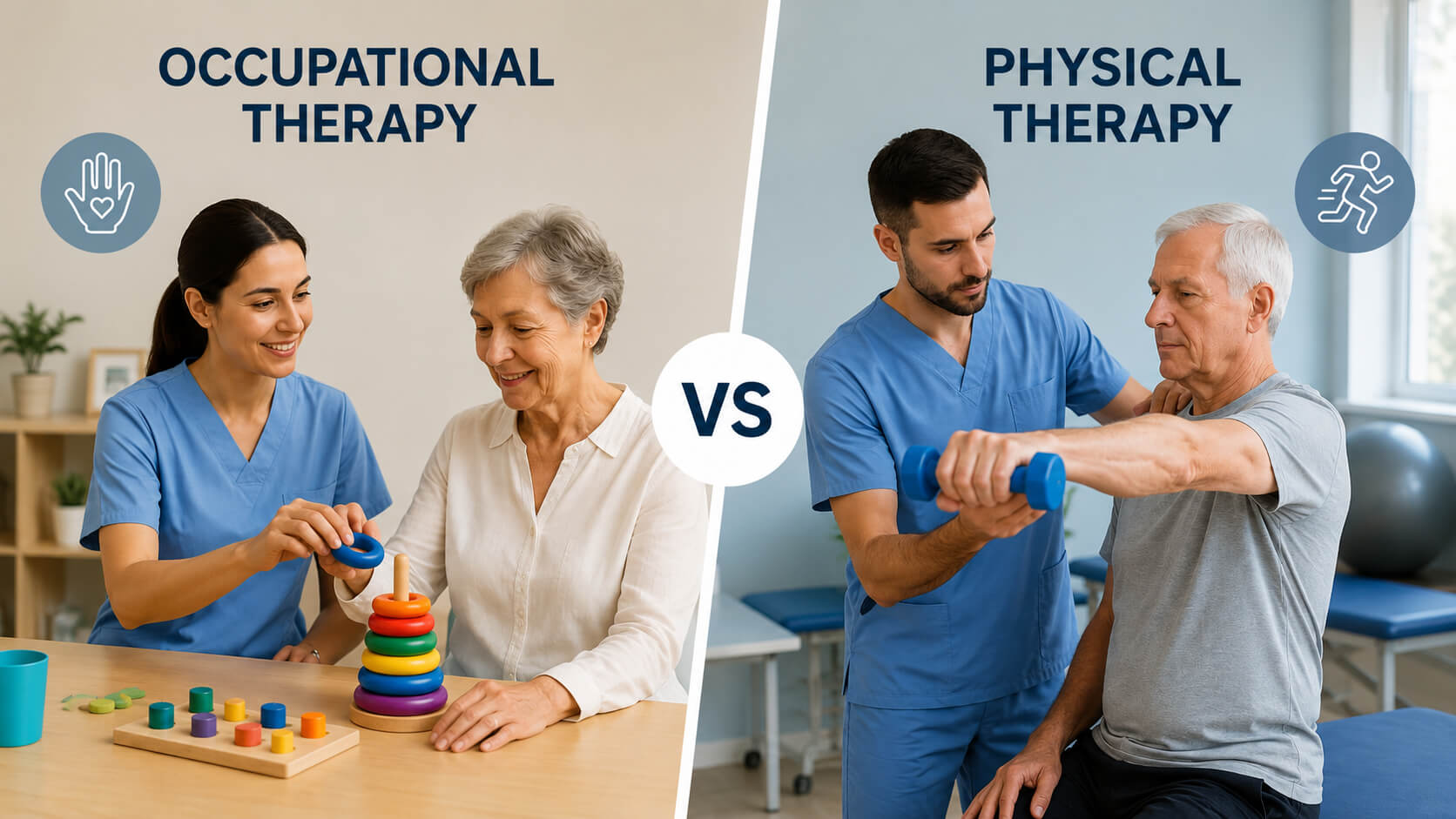
After surgery, an injury, or a hospital stay, your doctor might mention therapy. But which kind? Occupational therapy vs physical therapy is one of the most common questions families ask us, and the confusion makes sense. Both therapies help you recover. Both involve licensed clinicians. But they focus on different goals.
At Advanced Professional Home Health Care, we help patients across Metro Detroit and Flint figure out exactly which therapy fits their recovery. This guide breaks down the real differences, so you can make a confident decision instead of guessing.
What Is Occupational Therapy vs Physical Therapy, Really?
Physical therapy focuses on movement. It helps you walk, balance, and rebuild strength after injury recovery or surgery. Occupational therapy focuses on independence. It helps you safely manage daily tasks: dressing, cooking, bathing, even when your body isn’t working the way it used to.
| Question | Physical Therapy | Occupational Therapy |
| Main focus | Movement, strength, balance, and mobility | Daily independence, safety, and functional tasks |
| Best for | Walking problems, weakness, pain, balance issues, fall recovery, surgery rehab | Bathing, dressing, cooking, grooming, hand use, home safety, daily routines |
| Common patients | Seniors, post-surgery patients, stroke survivors, people recovering from falls or injuries | Seniors, stroke survivors, hand or shoulder surgery patients, people struggling with daily tasks |
| Example goal | Walk safely, climb stairs, improve balance, reduce pain | Shower safely, get dressed, prepare meals, use adaptive tools |
| Often used after | Hip replacement, knee replacement, stroke, fall, injury, surgery | Stroke, hand surgery, shoulder surgery, joint replacement, illness-related weakness |
| Can it be provided at home? | Yes, in-home physical therapy can help patients rebuild mobility safely at home | Yes, in-home occupational therapy can evaluate the patient’s real home setup and daily routine |
What is occupational therapy vs physical therapy in practice? A physical therapist might help you relearn how to walk after a stroke. An occupational therapist might then help you safely get in and out of the shower using that same improved mobility.
Physical Therapy: Rebuilding Movement and Strength
Physical therapy is usually the first step after therapy after surgery or therapy after injury. A physical therapist evaluates your strength, range of motion, and pain levels, then builds a plan to get your body moving safely again.
What Physical Therapy Actually Treats
Physical therapy for mobility issues is one of the most common reasons people start treatment. This includes:
- Walking and balance after a fall or stroke
- Strength rebuilding after physical therapy after surgery, like joint replacements
- Pain reduction through targeted movement and manual therapy
- Fall-prevention training for older adults
Physical therapy exercises for mobility typically include guided walking, stair practice, and resistance training, adjusted week by week as strength improves.
Who Benefits Most
Physical therapy for seniors is especially valuable, since aging bodies recover more slowly and fall risk increases sharply after surgery or illness. A structured plan, delivered consistently, makes a measurable difference in how quickly someone regains independence.
Occupational Therapy: Rebuilding Daily Independence
Where physical therapy rebuilds movement, occupational therapy rebuilds function. An occupational therapist looks at your actual daily routine and asks: can you safely do this on your own?
What Occupational Therapy Actually Treats
This often includes:
- Bathing, dressing, and grooming safely
- Cooking and light household tasks
- Hand therapy for grip strength and fine motor control after injury or surgery
- Adapting the home environment to reduce fall risk
Occupational therapy after surgery is common for patients recovering from hand surgery, shoulder repairs, or major joint replacements where daily tasks suddenly feel impossible.
Outpatient vs In-Home Options
Some patients attend outpatient occupational therapy at a clinic. Others, especially those with limited mobility or transportation, search for in-home occupational therapy near me instead. Home-based OT lets the therapist evaluate your actual bathroom, kitchen, and bedroom setup, which leads to more practical, realistic recommendations than a clinic visit ever could.
How a Therapy Evaluation Decides What You Need

Every plan starts with a therapy evaluation. A licensed therapist reviews your medical history, current limitations, and recovery goals before recommending a path forward.
This step matters more than people realize. The wrong starting point wastes time and slows functional recovery. A good evaluation answers three questions clearly:
- What can you currently do safely on your own?
- What’s preventing full independence?
- Which therapy or combination of therapies closes that gap fastest?
If you’re unsure which type of care fits your situation, Advanced Professional Home Health Care’s care coordination team can walk you through this evaluation process and connect you with the right service from day one.
Recovering From Surgery: Which Therapy Comes First?
This is where most confusion happens. Post-surgery rehab often involves both therapies, just at different recovery points. For a hip or knee replacement, physical therapy usually starts first, focused on walking and weight-bearing safely. Occupational therapy often follows soon after, focused on safely managing stairs, getting dressed, and using the bathroom independently.
For hand or shoulder surgery, the order often flips. Occupational therapy may lead, focusing on fine motor recovery and daily task management, while physical therapy supports broader strength and range of motion. There’s no single universal order. It depends entirely on the surgery, the patient, and the evaluation results.
Can You Need Both at the Same Time?
Yes, and it’s more common than people expect. Stroke recovery, major joint replacements, and complex injuries often require both therapies working in coordination, not in sequence.
This is where home health care and physical therapy, paired with occupational therapy, become especially effective. When both therapists communicate with each other and with the patient’s physician, recovery moves faster and avoids the gaps that happen when services operate separately.
At Advanced Professional Home Health Care, our clinical teams coordinate physical therapy, occupational therapy, skilled nursing, and family support under one connected care plan. Patients and families consistently tell us this coordination is what made recovery feel manageable instead of overwhelming.
How to Choose: A Quick Decision Guide
Still unsure which therapy fits your situation? Ask yourself these questions:
Struggling to walk, climb stairs, or maintain balance?
Start with physical therapy.
Struggling to dress, cook, or manage daily routines safely?
Start with occupational therapy.
Recovering from major surgery with both movement and daily-task challenges?
You likely need both, coordinated together.
Not sure at all?
A care coordination team can evaluate your situation and recommend the right starting point. Reach out to APHHC’s patient support services if you’re navigating this decision for yourself or a family member.
Why Coordinated Care Matters for Families
Choosing between Occupational Therapy vs Physical Therapy shouldn’t feel like guesswork, especially during an already stressful recovery period. Families trying to understand the right therapy option deserve clear answers, practical guidance, and a care team that communicates well every step of the way.
Advanced Professional Home Health Care has spent years building exactly that kind of coordinated, patient-first care model across Metro Detroit and Flint. Our community care services connect families with the right therapy, the right timeline, and a team that actually talks to each other.
If your family is facing this decision right now, our care coordination team is ready to help you sort through it. Contact Advanced Professional Home Health Care today to discuss your loved one’s needs and find the right therapy support at home.