
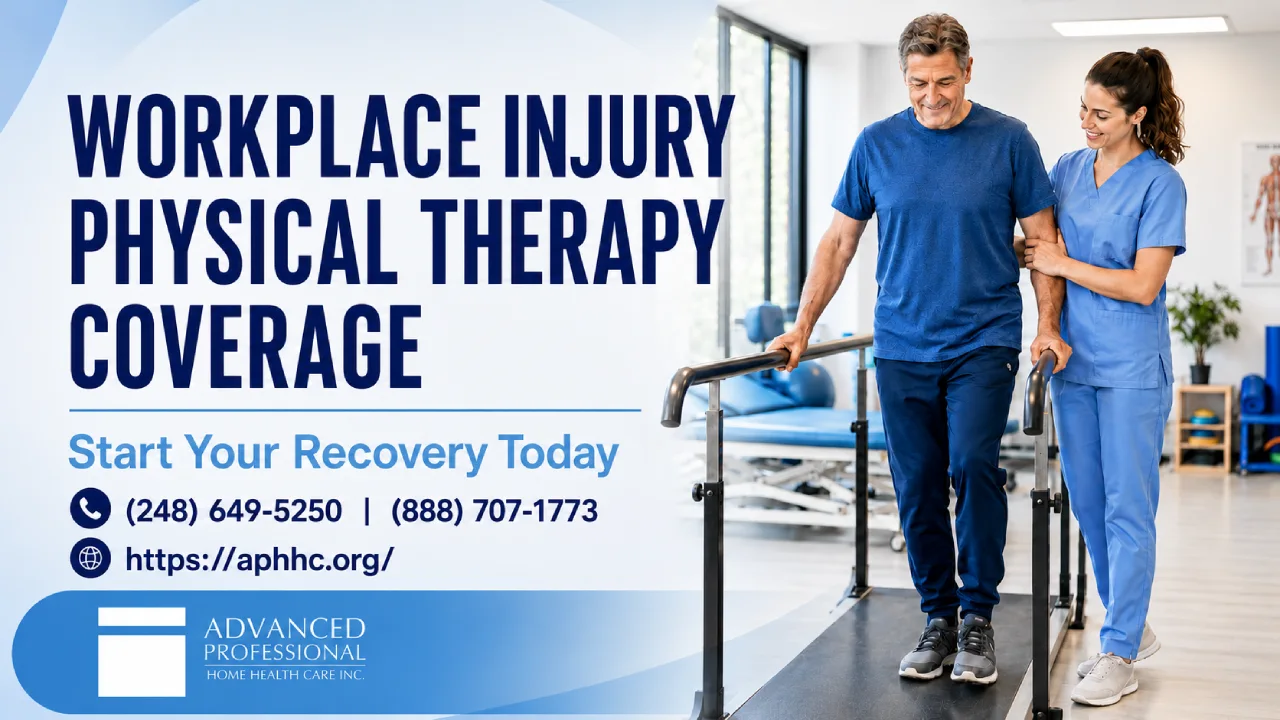
A workplace injury can affect your comfort, mobility, income, and ability to complete everyday activities. It can also introduce an unfamiliar process involving medical appointments, employer reports, insurance representatives, treatment approvals, and work restrictions.
Many injured employees want to know whether workplace injury physical therapy coverage can help them access the rehabilitation they need. In Michigan, workers’ compensation may pay for reasonable and necessary medical treatment associated with an accepted job-related injury. This treatment can include rehabilitation when it is ordered, properly documented, and approved under the claim.
Coverage is not guaranteed simply because an injury happened at work. The diagnosis, medical recommendation, claim status, authorization requirements, and treatment records can all affect payment.
APHHC provides professional physical therapy at home for eligible patients in Michigan. Understanding the approval process can help injured workers make informed decisions and avoid unnecessary delays.
Understanding Workplace Injury Physical Therapy Coverage
Physical therapy helps restore movement and function following an injury, operation, illness, or period of limited activity. When a condition is connected to a person’s employment, the rehabilitation plan may focus on both everyday mobility and the physical abilities needed for the job.
Workers’ compensation physical therapy may be recommended for an employee who has difficulty walking, lifting, standing, bending, reaching, climbing stairs, or maintaining balance after an occupational accident.
A licensed therapist begins by reviewing the diagnosis, symptoms, medical history, precautions, and current limitations. The therapist then develops measurable goals based on the individual’s condition and functional needs.
Treatment may include:
- Strengthening exercises
- Flexibility and range-of-motion activities
- Walking and balance training
- Posture and body mechanics education
- Transfer and mobility practice
- Pain-management techniques
- A personalized home exercise program
- Education about safe activity progression
The exact approach depends on the diagnosis and medical plan. Two employees with similar injuries may need different exercises, treatment frequencies, and recovery timelines.
Does Workers Comp Cover Physical Therapy?
The answer depends on the circumstances surrounding the injury and claim. In general, rehabilitation may qualify when it is medically necessary, directly related to an accepted occupational condition, and provided according to applicable claim requirements.
A physician or another qualified medical professional may need to recommend treatment. The insurance carrier may also require prior authorization before visits begin.
Approval can be influenced by:
- Whether the accident or condition is considered job related
- Whether the workers’ compensation claim has been accepted
- Whether rehabilitation is appropriate for the diagnosis
- Whether an order or referral has been submitted
- Whether the selected provider meets claim requirements
- Whether the requested frequency and duration are reasonable
- Whether clinical records demonstrate continued need
- Whether the patient is making measurable functional progress
Physical therapy covered by workers comp does not necessarily mean unlimited visits. A carrier may approve an initial number of sessions and review the therapist’s notes before authorizing additional treatment.
APHHC lists workers’ compensation among the coverage types identified on its About APHHC page. Because benefits vary, patients should verify their individual eligibility before beginning nonemergency care.
Common Workplace Injuries Requiring Physical Therapy
Occupational injuries can happen in factories, hospitals, offices, warehouses, construction sites, retail stores, restaurants, and transportation settings. Some result from sudden accidents. Others develop gradually through repetitive motion, prolonged posture, or repeated physical strain.
Conditions that may benefit from rehabilitation include:
Back injuries
Lifting, carrying, twisting, pushing, or pulling can strain the muscles and supporting structures of the back. A rehabilitation plan may address mobility, core strength, posture, and safer movement habits.
Shoulder injuries
Repeated reaching, overhead work, heavy lifting, or a fall may affect the shoulder. Therapy may focus on restoring motion and improving the strength needed for reaching and carrying.
Knee and ankle injuries
Slips, trips, falls, and sudden changes in direction can injure the lower extremities. Treatment may help improve joint movement, walking ability, stability, and balance. APHHC also explains the difference between a sprained ankle and a rolled ankle.
Neck pain
Sudden movement, awkward positioning, or prolonged computer work may contribute to neck discomfort and stiffness. Treatment may address mobility, posture, strength, and activity tolerance.
Repetitive-use conditions
Repeated gripping, reaching, lifting, or operating equipment can gradually irritate muscles, joints, and tendons. Care may include movement education, progressive exercise, and strategies for reducing unnecessary strain.
Fractures and postsurgical limitations
After immobilization or surgery, an employee may experience weakness, stiffness, poor balance, or reduced endurance. Guided rehabilitation can help rebuild function at an appropriate pace.
How Rehabilitation Supports Functional Recovery
Physical therapy after work injury is intended to improve more than pain. A person may feel somewhat better but still be unable to stand through a shift, climb steps safely, lift an object, or walk across a worksite.
A therapist looks at how the condition affects practical movement. The care plan may address joint motion, muscle performance, balance, coordination, endurance, and confidence with activity.
The patient’s response is monitored throughout treatment. Exercises can be advanced, modified, or temporarily reduced according to symptoms, precautions, and clinical progress.
Consistent participation is important. Patients should attend authorized appointments, complete exercises as instructed, and report meaningful changes. Trying to advance too quickly may aggravate symptoms, while avoiding movement longer than medically necessary may contribute to stiffness and weakness.
People who have difficulty traveling can learn more about who may need physical therapy at home. Home-based services may be appropriate when supported by the patient’s clinical condition, physician’s plan, provider criteria, and insurance authorization.
What Happens During the Initial Evaluation?
Work-related injury physical therapy usually begins with a detailed assessment. The therapist gathers information about the accident, diagnosis, treatment history, symptoms, precautions, job demands, and activities that have become difficult.
The physical assessment may include:
- Joint range of motion
- Muscle strength
- Walking pattern
- Balance and coordination
- Posture
- Swelling
- Transfer ability
- Tolerance for standing or movement
- Performance of relevant functional tasks
Patients should describe their limitations precisely. Saying, “I can stand for approximately ten minutes before my back pain increases” gives the therapist more useful information than simply saying, “My back hurts.”
To evaluate professional physical therapy on workplace injuries, consider whether the plan connects clinical findings to specific, measurable goals. Examples could include walking a certain distance safely, improving shoulder movement, using stairs, or completing a transfer with less assistance.
Why Documentation Is Important
Accurate records help show why treatment is needed and how it relates to the occupational condition. They can also help the insurer evaluate requests for continued visits.
Documentation may include:
- The initial examination
- The medical diagnosis
- Physician orders
- Functional limitations
- Planned interventions
- Attendance
- Response to treatment
- Progress toward goals
- Updated work restrictions
- Discharge recommendations
Injured workers should keep their claim number, representative’s contact information, medical instructions, and authorization details organized. Copies of work restrictions and important communications should also be retained.
During workplace injury rehab, patients should provide honest and specific information. Changes in pain, swelling, walking ability, strength, or activity tolerance can help the clinician determine whether the plan needs to be adjusted.
Rehabilitation and Returning to Employment
Return to work physical therapy helps connect clinical improvement with the functional demands of employment. The objective is not to send someone back as quickly as possible. It is to support a safe and sustainable transition based on medical guidance.
Treatment goals may relate to:
- Standing or walking tolerance
- Safe lifting mechanics
- Reaching ability
- Balance on different surfaces
- Lower-body strength
- Grip and upper-body function
- Endurance during repeated activity
- Confidence with essential movements
Some employers may provide modified duties, reduced hours, or temporary restrictions during recovery. These arrangements may allow the employee to resume certain responsibilities without exceeding current medical limitations.
The physician, therapist, injured employee, employer, and claim representative may each contribute information to the process. The therapist documents functional progress but does not independently determine coverage, claim acceptance, or final employment status.
When Home-Based Rehabilitation May Be Appropriate
Traveling to a clinic may be difficult after surgery or a serious accident. Pain, poor balance, reduced endurance, limited walking ability, or the need for assistance can make repeated trips challenging.
Work injury rehabilitation may sometimes be provided in the patient’s residence when home-based services are medically appropriate and authorized. This setting allows the therapist to observe how the patient moves through the actual environment used each day.
The therapist may address:
- Walking between rooms
- Entering or leaving the home
- Using stairs
- Moving from a bed or chair
- Reducing fall hazards
- Using assistive equipment correctly
- Completing prescribed exercises safely
Home treatment is not appropriate for every condition or recovery stage. Some patients may need specialized equipment or services available in another setting. The physician and rehabilitation team can help identify the appropriate level of care.
Patients comparing providers can review APHHC’s guide on how to choose the right home care physical therapy provider.
What Injured Workers Should Do After an Accident

Taking organized steps after an occupational accident may help prevent confusion and treatment delays.
- Report the accident or symptoms to the employer promptly.
- Record where, when, and how the condition occurred.
- Seek emergency care when symptoms are severe or urgent.
- Follow the employer’s instructions for obtaining medical attention.
- Explain which job activities caused or aggravated the condition.
- Ask whether physical therapy for work injury is medically appropriate.
- Obtain the claim number and representative’s contact details.
- Confirm whether authorization is required before scheduling.
- Follow medical restrictions and attend approved appointments.
- Save copies of forms, orders, and claim communications.
If a physician recommends home health services, the provider can use APHHC’s doctor referral form. A submitted referral allows the care team to review the request, but it does not guarantee insurance approval or payment.
Choosing an Appropriate Provider
Someone searching for workers comp physical therapy near me should consider more than distance. The provider should offer the ordered service, cover the patient’s location, employ qualified clinicians, and understand the documentation needed for authorized treatment.
Another common search is work injury physical therapy near me, especially when traveling is difficult. Before choosing a provider, ask:
- Does the provider serve my community?
- Are licensed therapists available?
- Can the team review authorization requirements?
- How are treatment goals established?
- How is progress reported?
- Does the provider offer home-based care?
- What happens if additional visits are needed?
- Who should be contacted about coverage questions?
APHHC serves Michigan patients from its Troy and Flint locations. Its wider range of home health services may support eligible patients who need coordinated care in addition to rehabilitation.
Questions to Ask Before the First Visit
Before beginning workers comp physical therapy, confirm the following information with the insurer, claim representative, and provider:
- Has the claim been accepted?
- Has rehabilitation been ordered?
- Is prior authorization required?
- How many visits are currently approved?
- Is home-based treatment included?
- Is the selected provider authorized?
- Who receives clinical progress reports?
- What happens if additional treatment is requested?
- Could the patient be responsible for denied services?
Written confirmation can reduce misunderstandings. Patients should avoid assuming that every recommended service is automatically approved.
How APHHC Can Support Eligible Michigan Patients
Advanced Professional Home Health Care (APHHC) provides physical therapy for injured workers who meet the applicable clinical, referral, service-area, and coverage requirements. Care is planned around the patient’s condition, physician’s orders, functional limitations, and recovery goals.
The home setting can make treatment more convenient for people who have difficulty leaving their residence. It also allows exercises and safety strategies to be practiced in a familiar environment.
Patients and referral sources can contact APHHC to ask about service availability, intake requirements, insurance verification, and the referral process. The APHHC team can review available information, but the workers’ compensation insurer remains responsible for its final coverage decision.
Take the Next Step Toward Recovery
A job-related injury can create uncertainty, but an organized treatment process can make the next steps clearer. Report the condition, obtain appropriate medical attention, confirm claim requirements, and follow the authorized care plan.
Work injury physical therapy can help address limitations involving strength, movement, balance, endurance, and daily function. Workplace injury physical therapy coverage may help eligible employees access medically appropriate rehabilitation services following a job-related injury. Physical therapy for workplace injuries may support greater independence, improved mobility, and a safer transition back to normal activities. If you have a medical order or would like to discuss service availability and coverage options in Michigan, connect with APHHC today.