
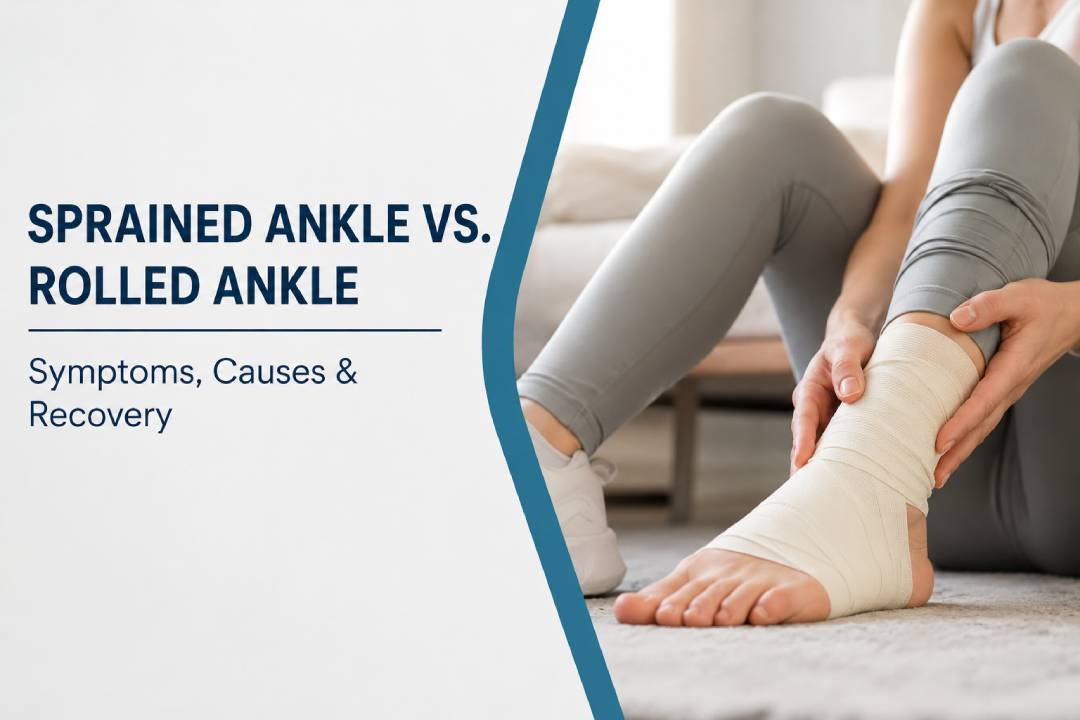
Many people search for sprained ankle vs rolled ankle because both terms are used for the same type of injury. A rolled ankle describes how the injury happens. A sprained ankle means the ligaments in the ankle have stretched or torn.
For families and care teams, understanding the difference helps guide safe recovery and timely care. Advanced Professional Home Health Care supports patients by helping families manage mobility, reduce fall risk, and plan recovery at home.
Quick Answer: Sprained Ankle vs Rolled Ankle
A rolled ankle can turn into a sprain if the ligaments are damaged. The difference is simple:
- Rolled ankle = the motion (twisting or turning)
- Sprained ankle = the injury (ligament damage)
Is a rolled ankle the same as a sprained ankle?
Sometimes yes. A mild twist may only cause soreness. But if swelling, pain, or bruising appears, it is likely a ligament injury.
What changes the care approach?
Care depends on symptoms. Mild discomfort may improve with rest. A sprain may need a compression wrap, reduced activity, and sometimes physical therapy for ankle pain.
Key Symptoms That Need Attention
Symptoms often appear quickly after a twist or fall. According to Mayo Clinic and Cleveland Clinic, common signs of an ankle sprain include pain, swelling, bruising, and reduced movement.
| Symptom | What it may mean | Care note |
| Outer ankle pain | Possible lateral ligament strain | Common after inward twisting (inversion injury) |
| Weight-bearing pain | Injury may affect ligaments or bone | Seek care if walking is difficult |
| Ankle stiffness | Swelling limiting movement | Gentle motion may help after pain reduces |
| Ankle bruising | Blood vessels under skin affected | Bruising after ankle sprain may spread downward |
| Ankle weakness | Muscles may not support joint well | Rehab helps prevent repeat injury |
| Gait changes | Limping or uneven walking | Increases fall risk |
Seek medical care if symptoms worsen or do not improve.
What Causes an Ankle Sprain?
Most ankle sprains happen due to an inversion injury, where the foot rolls inward. This often leads to a lateral ankle sprain.
Common causes include:
- Walking on uneven surfaces
- Missing a step
- Wearing unstable footwear
- Sudden movement during sports
- Poor balance or muscle weakness
For older adults or patients receiving home care, ankle instability and reduced ankle mobility increase fall risk. Safe home environments and mobility support are important.
Sprained Ankle vs Broken Ankle: When to Be Concerned
Sprained ankle vs broken ankle symptoms can look similar. Both may cause swelling, bruising, and pain.
However, a fracture may include:
- Severe or sharp pain
- Visible deformity
- Inability to stand or walk
- Bone tenderness
- Numbness or color changes
According to AAOS and MedlinePlus, these signs require urgent medical evaluation.
Many families ask, “Can you walk on a sprained ankle?”
Some mild sprains allow walking, but walking through pain can delay healing and increase ankle instability.
Ankle Sprain Recovery Stages
Recovery depends on injury severity. Cleveland Clinic explains that sprains range from mild stretching to partial or complete ligament tears.
How long does a rolled ankle take to heal?
Healing time varies:
- Mild sprain: 1–2 weeks
- Moderate sprain: 3–6 weeks
- Severe sprain: 8–12 weeks or longer
| Stage | Focus | Care step |
| First 24–72 hours | Reduce swelling | Rest, ice, elevation, compression wrap |
| Days 3–7 | Restore movement | Gentle ankle mobility exercises |
| Weeks 1–3 | Improve walking | Avoid limping and monitor gait changes |
| Weeks 3–6 | Build strength | Add balance and strengthening exercises |
| Weeks 6+ | Prevent re-injury | Address ankle weakness and instability |
Recovery should be gradual. Pain and swelling guide activity levels.
Home Care Steps for Safe Recovery
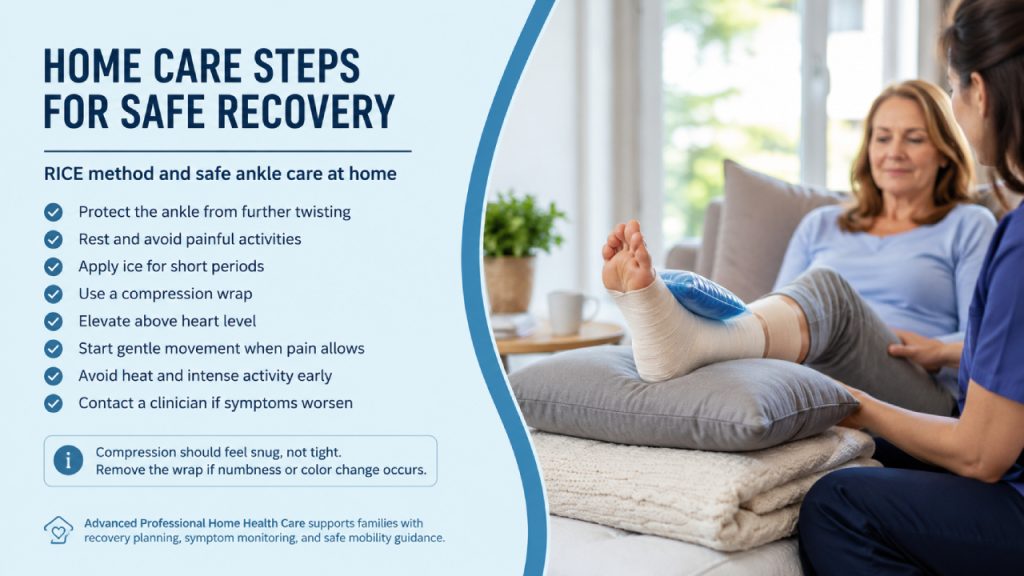
Early care focuses on protecting the ankle and reducing swelling. AAOS recommends rest, ice, compression, and elevation (RICE method).
Follow these steps:
- Protect the ankle from further twisting.
- Rest and avoid painful activities.
- Apply ice for short periods.
- Use a compression wrap.
- Elevate the ankle above heart level.
- Start gentle movement when pain allows
- Avoid heat and intense activity early.
- Contact a clinician if symptoms worsen.
A compression wrap should feel snug but not tight. Remove it if there is numbness or color change. Families managing care at home can benefit from structured support. Advanced Professional Home Health Care helps coordinate recovery plans, monitor symptoms, and guide safe mobility.
Physical Therapy for Ankle Pain
Physical therapy for ankle pain is helpful when stiffness, weakness, or limited range of motion continues.
Therapy may include:
- Improving ankle mobility
- Strengthening muscles
- Balance training
- Correcting gait changes
- Preventing repeat injuries
A twisted ankle vs sprained ankle distinction matters less during rehab. Treatment focuses on restoring function and stability. Families can explore Patient Support Services or Care Coordination resources to plan recovery steps and follow-up care.
Practical Takeaways for Families
Understanding ankle injuries helps prevent complications and supports faster recovery.
Key points:
- A rolled ankle describes the movement.
- A sprain means ligament injury.
- Outer ankle pain often signals ligament strain.
- Bruising after an ankle sprain can be normal.
- Walking through pain can delay healing.
- Rehab improves strength and balance.
- Early care reduces long-term ankle instability.
Advanced Professional Home Health Care supports families with recovery planning, mobility guidance, and coordinated care at home. For assistance, families can visit the Contact APHHC page or explore Home Healthcare Services.
Medical Disclaimer
This article is for educational purposes only and does not replace medical advice. Seek urgent care for severe pain, deformity, numbness, color changes, open wounds, fever, or inability to bear weight.