
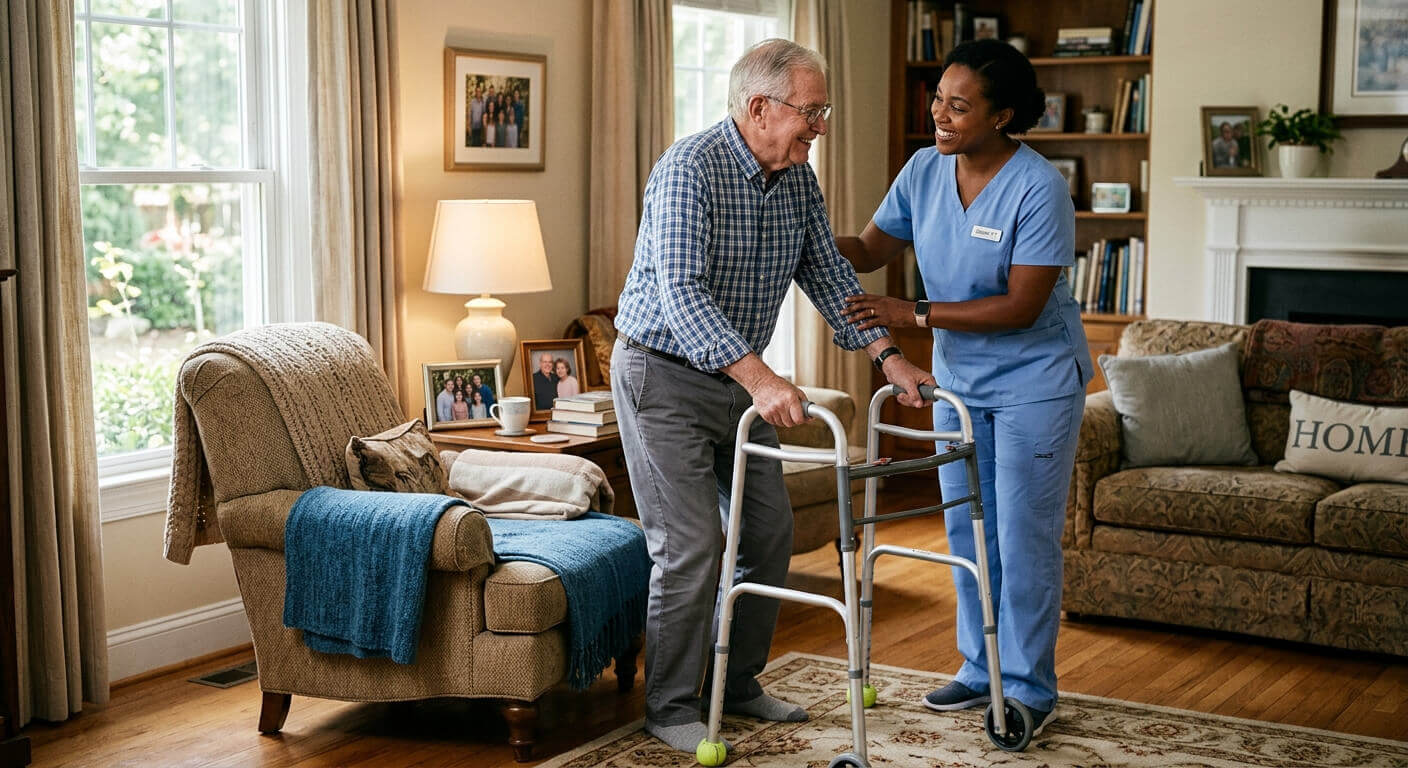
Recovering from surgery, a stroke, or a fall can feel overwhelming. Getting to a clinic for therapy can feel even harder. That’s where physical therapy at home comes in, bringing licensed therapists directly to your living room, so healing happens where you feel safest.
At Advanced Professional Home Health Care, we’ve watched this model change lives across Metro Detroit and Flint. Patients regain strength faster. Families worry less. And recovery feels less like a chore and more like a partnership.
This guide breaks down who needs home-based therapy, what services are included, and whether Medicare will help cover the cost.
What Is Physical Therapy at Home?
Physical therapy at home means a licensed physical therapist comes to your house instead of you traveling to a clinic. They bring the tools they need and build a treatment plan around your actual living space: your stairs, your bathroom, your bedroom.
This isn’t a watered-down version of clinic care. It’s full home health physical therapy, delivered with the same clinical standards, just in a more practical setting for people who struggle to leave home.
Many families start searching for physical therapy at home near me right after a hospital discharge, when getting to appointments suddenly feels impossible.
Who Actually Needs This Kind of Care?
Not everyone needs therapy at home. But for certain patients, it’s the difference between steady progress and falling behind.
Seniors Recovering From Falls or Surgery
At-home physical therapy for elderly patients is one of the most common reasons families reach out to us. After a hip replacement or a bad fall, even a short car ride to a clinic can be risky. Bringing therapy home removes that danger entirely.
Stroke Survivors Rebuilding Function
Physical therapy for stroke patients at home allows therapists to work on real-world tasks walking to the kitchen, getting in and out of bed, and transportation.
Some patients simply can’t get to outpatient physical therapy at home because they don’t have safe transportation or a caregiver available to drive them. Home-based care closes that gap.
Post-Surgical Patients Needing Close Monitoring
After joint replacements or major surgery, in-home physical rehabilitation lets therapists track healing closely, catch complications early, and adjust the plan in real time.
What Services Are Included in Home Physical Therapy?
A strong physical therapy at-home services plan covers more than just exercises. Here’s what’s typically included:
- Mobility training walking, transferring from bed to chair, climbing stairs safely.
- Strength building targeted exercises to rebuild muscle after illness or surgery.
- Balance and fall-prevention work critical for older adults living alone.
- Pain management techniques manual therapy, stretching, guided movement
- Home safety assessments identifying fall risks like loose rugs or poor lighting
- Caregiver education teaching family members how to safely assist with daily movement
Therapists who provide home physical therapy services also coordinate with your physician, nurse, and any other care team members involved in your recovery. This kind of coordinated care is part of what makes home health care and physical therapy so effective together nobody is working in isolation.
Does Medicare Cover Physical Therapy at Home?
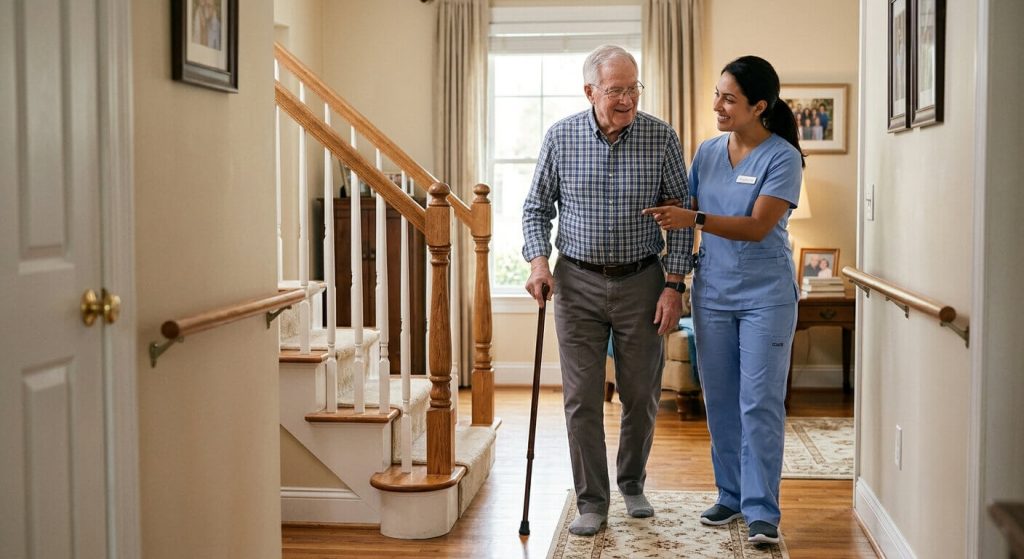
This is the question we hear most often, and the answer is yes under specific conditions. Does Medicare cover physical therapy at home? Generally, Medicare Part A or Part B will cover home health PT when:
- A doctor certifies that you need skilled therapy.
- You are considered “homebound” (leaving home requires significant effort or assistance)
- The care is provided by a Medicare-certified home health agency.
- A doctor has established and regularly reviews your care plan.
If you qualify, Medicare typically covers 100% of the approved cost for physical therapy home health services, with no copay for the therapy visits themselves under Part A.
It’s worth noting that in-home physical therapy costs can vary outside of Medicare coverage. Private insurance plans, Medicaid, and out-of-pocket rates all differ, which is why a quick benefits check before starting care saves families a lot of stress later.
Private Pay and Private Insurance Options
Not every patient qualifies for Medicare-covered care, and that’s okay. Private physical therapy at home is available for patients who don’t meet the homebound requirement or simply prefer to pay privately for flexibility in scheduling.
Private in-home physical therapy also tends to offer more frequent visit options for families who want intensive, short-term rehabilitation support after a specific event, like a sports injury or elective surgery.
How to Find the Right Provider
When you start searching for at-home physical therapy near me, look past the first few search results. Ask these questions:
- Is the agency Medicare-certified?
- Are the therapists licensed and background-checked?
- Does the agency coordinate with your physician and nursing team?
- What does a typical visit actually include?
A reliable home-visit physiotherapist should be able to answer all four questions clearly, without vague marketing language.
Families looking for physical therapists that come to your home should also confirm coverage areas. Advanced Professional Home Health Care, for example, serves Metro Detroit and Flint, with a clinical team built around coordinated, physician-directed care.
What a Typical Visit Looks Like
Curious what actually happens during a session? Here’s a realistic walkthrough:
Arrival and Check-In: The therapist reviews how you’ve felt since the last visit pain levels, sleep, any new symptoms.
Functional Movement Work: You’ll work on real tasks: standing up safely, walking short distances, navigating stairs if needed.
Strength and Balance Exercises: Targeted movements designed around your specific recovery goals, adjusted session by session.
Home Safety Check: The therapist may walk through your space, pointing out small changes that reduce fall risk.
Caregiver Coaching: If family members are present, the therapist often shows them how to safely assist between visits.
This combination of clinical work and practical home guidance is what separates true in-home rehabilitation services from a generic check-in visit.
Why Coordinated Home Health Care Matters
Therapy doesn’t happen in a vacuum. The strongest outcomes come from home health care and physical therapy working together, with nursing, therapy, and family support all aligned around one care plan.
At APHHC, our clinical team coordinates physical therapy alongside skilled nursing, medical social work, and home health aide support when needed. This kind of structured, communicative care environment is part of what builds real patient confidence and family trust over time.
We’ve also seen how thoughtful care planning, clear communication, predictable scheduling, and a calm, organized approach to home visits directly improve how patients experience recovery. Families notice it. Referring physicians notice it too.
Common Questions Families Ask
How many sessions will I need?
It depends entirely on your condition. Some patients need a few weeks of support after surgery. Others, especially stroke survivors, may need months of consistent therapy to rebuild function.
Can therapy happen if I live alone?
Yes. Many patients living alone benefit the most from home-based therapy, since safety and mobility training happen directly in the space where they’re most vulnerable to falls.
What if my needs change mid-treatment?
A good provider adjusts your plan as you progress. If you need additional skilled nursing or aide support, your therapist should be able to coordinate that referral directly.
Ready to Get Started?
If you or a loved one is recovering from surgery, illness, or a fall, home-based therapy might be the safest, most practical path forward. Advanced Professional Home Health Care has spent years building a coordinated care model across Metro Detroit and Flint, one where therapy, nursing, and family support work together instead of separately.
Reach out to our care coordination team to ask about eligibility, Medicare coverage, or to schedule an initial assessment. Recovery is hard enough without confusion about where to start.